When should you contact Dobsons Plumbing and Gas for an emergency plumbing problem?
Updated: 9 hours ago

By Dobsons Plumbing and Gas
You should contact an emergency plumber when a plumbing fault is causing, or is likely to cause, significant water damage, make essential facilities unusable or create an immediate risk to people or the property. A burst pipe, serious leak, overflowing tank or blocked toilet that cannot be used safely should not be left until it becomes worse.
Minor drips and slow blockages may be suitable for a planned repair, but the decision depends on how quickly the problem is developing, whether you can isolate it and what damage is already occurring. If you are unsure, take sensible steps to limit the risk and ask for professional advice rather than guessing.
In short: contact Dobsons Plumbing and Gas promptly if water cannot be controlled, a key plumbing service has failed or the fault could damage your home. Isolate the water if you can do so safely, then explain exactly what has happened when you call.
Which plumbing problems need urgent attention?
The clearest sign of an emergency is uncontrolled water. Water spreading through floors, ceilings, walls or cupboards can damage plaster, flooring, joinery, electrical fittings and personal belongings. The longer it continues, the more difficult and disruptive the repair may become.
Burst pipes and rapidly worsening leaks
A burst pipe is an emergency even if the visible flow appears manageable. Pressure can continue pushing water into concealed areas, and a small opening can become a much larger failure without warning.
Act urgently if you can see water escaping from a pipe, radiator connection, valve, cylinder or ceiling. The same applies if a leak is close to electrical sockets, appliances, consumer units or light fittings.
Water coming through a ceiling or wall
Water stains, bulging plaster, dripping light fittings or damp patches that are growing quickly may indicate a leak from plumbing above or behind the surface. Do not assume the visible mark shows the location of the fault; water can travel along joists, pipework and other building materials.
If the ceiling is sagging, keep people away from the area and avoid standing beneath it. Isolate the water supply if this can be done safely, then arrange urgent help to identify and control the source.
Overflowing toilets, tanks or appliances
An overflowing toilet should be treated as urgent when the flow cannot be stopped, the water is contaminated or the bathroom cannot be used without spreading waste water. Stop using the toilet and keep children and pets away from the affected area.
Overflowing storage tanks, washing machines, dishwashers and other connected appliances can also cause substantial damage. Turn off the appliance if safe, close its water supply where accessible and avoid repeatedly switching it on to test the problem.
No water or loss of an essential facility
A complete loss of water may need urgent investigation where it affects toilets, washing, heating or other essential household needs. The cause could be an internal leak, a failed valve, a frozen or damaged pipe, or an issue outside the property.

A single tap failing is less likely to be an emergency than a whole property losing its water supply. However, a sudden change should still be checked, particularly if it occurs alongside unusual noises, damp patches or a drop in pressure.
When is a leak not necessarily an emergency?
Not every plumbing fault needs an emergency call-out. A slow drip into a container, a tap that needs repair or a toilet that is still flushing normally may be manageable as a planned plumbing repair, provided the situation is stable and not causing damage.
That does not mean the fault should be ignored. Small leaks can worsen, stain surfaces, encourage damp and increase water use. If you are containing a drip, check it regularly and arrange a repair before the temporary measure fails.
Consider these questions:
Is the amount of water increasing?
Can the water be isolated without creating another risk?
Is water reaching flooring, plaster, electrics or stored belongings?
Is the affected toilet, sink, shower or appliance essential?
Could the fault cause damage while you are asleep or away?
If the answer to any of these points is concerning, it is sensible to seek advice sooner rather than waiting for a complete failure. The cost and disruption of an emergency may be higher than a planned repair, but delaying a serious leak can create a much larger problem.
What to do before contacting an emergency plumber
Your first priority is to reduce the flow and protect people. Do not take apart pipework or attempt a repair if you are not confident; an incorrect adjustment can turn a controllable leak into a larger one.
1. Turn off the water if it is safe
For many internal leaks, the main stopcock can reduce or stop the incoming supply. It is often found under a kitchen sink, near where the supply enters the property or in a utility area, although its position varies.

Turn on a cold tap after isolating the supply to help release remaining pressure. If you cannot find the stopcock, it is seized or does not stop the flow, tell the plumber. Do not force a fragile valve or work in standing water near electrical equipment.
2. Protect the property without putting yourself at risk
Move furniture, boxes and valuables away from the affected area if they can be moved safely. Use towels or a suitable container to catch small amounts of water, but do not climb onto unstable surfaces or enter areas where the ceiling, flooring or electrics may be unsafe.
If water is near sockets, appliances or electrical fittings, keep away from the area. If it is safe to do so from a dry position, switch off the affected circuit or main electricity supply; otherwise leave it alone and seek urgent assistance.
3. Stop using the affected fixture
Do not use a leaking toilet, sink, shower, washing machine or dishwasher simply to check whether the problem has improved. Continued use may add more water to the system or push a blockage into an already affected drain.
For a blockage, avoid repeatedly adding chemical drain cleaner. It may not clear the underlying fault and can leave hazardous liquid in the pipework for anyone who later works on it. Tell the plumber what products, if any, have already been used.
4. Record useful information
When you contact a plumber, explain where the problem is, whether the water is clean or contaminated, whether it is still flowing and what you have done to isolate it. A photograph or short video can also help describe the issue if it is safe to take one.
It is useful to identify the property access arrangements, the location of the stopcock and whether the fault affects neighbours, communal areas or another property. Do not delay urgent action just to gather information.
What if the problem involves gas or a boiler?
A plumbing emergency and a gas emergency are not the same situation. If you smell gas, hear gas escaping or suspect a gas appliance is unsafe, do not use electrical switches, naked flames or anything that could create a spark. Open doors and windows if you can do so safely, leave the property and call the National Gas Emergency Service on 0800 111 999.
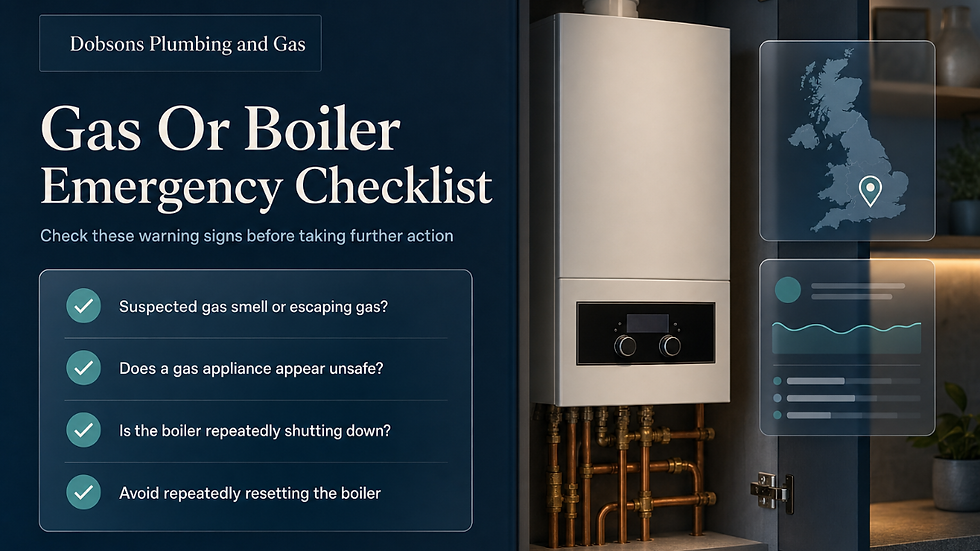
If a boiler has stopped working but there is no smell of gas, fire, flooding or other immediate danger, it may be a heating repair rather than a plumbing emergency. Check whether the manufacturer’s instructions identify a safe reset procedure, but do not repeatedly reset the appliance or remove its casing.
If this is the stage you are working through, you can also use What Happens During an Emergency Plumbing Repair with Dobsons Plumbing and Gas for the next practical checks.
Dobsons Plumbing and Gas lists boiler installation and repairs alongside plumbing, heating and gas services. For an urgent water leak or plumbing failure, you can review its emergency plumbing service information and use the listed contact route.
What information should you have ready?
Clear information helps a plumber understand the likely urgency before attending. You do not need to diagnose the fault yourself; describe what you can see and what changed.
The type of problem, such as a burst pipe, overflowing toilet, leak or loss of water.
Where the water or dampness is located and whether it is spreading.
Whether the water has been isolated and which fixtures are affected.
Whether there is damage to ceilings, flooring, walls, electrics or belongings.
Whether the water may be contaminated or connected with a drainage blockage.
Whether there is a suspected gas smell, boiler fault or other heating concern.
You should also ask what information the plumber needs, what you can safely do while waiting and what charges or repair decisions need to be confirmed before work begins. Do not assume that every emergency issue will have the same cause or require the same repair.
When should you contact Dobsons Plumbing and Gas?
Contact Dobsons Plumbing and Gas when you have an urgent plumbing fault that needs professional attention, particularly where water is escaping, a fixture is unusable or delaying action could increase property damage. The company’s verified service list includes plumbing repairs and emergency plumbing, as well as boiler, heating and gas work.
Use the emergency plumbing contact route when the situation has reached the point where you cannot safely control it or need a qualified tradesperson to investigate and repair the cause. Have the key details ready, but do not wait to make contact if the leak is continuing or the damage is worsening.
If the issue is stable and you can contain it, you may be able to arrange a non-emergency plumbing repair instead. The important distinction is not whether the fault is inconvenient; it is whether the risk, water loss or loss of essential use makes delay unsafe or likely to cause further damage.
Common mistakes that make plumbing emergencies worse
Waiting for the leak to stop on its own: a change in flow may be temporary, and water can remain trapped behind surfaces.
Using a bucket as the only solution: this may contain a small drip but will not protect concealed areas or prevent a pipe from failing further.
Forcing valves: old stopcocks and isolation valves can break when excessive force is applied.
Using contaminated water as normal: keep people away from sewage or dirty floodwater and arrange appropriate professional help.
Resetting a boiler repeatedly: recurring shutdowns may indicate a fault that needs investigation rather than another reset.
Trying to fix a gas concern yourself: suspected gas leaks require the emergency gas procedure, not DIY plumbing work.
Once the immediate risk is controlled, ask what caused the failure, whether nearby pipework or fittings also need checking and what should be done to prevent a repeat. A repair should address the source of the problem, not just conceal the visible water damage.
Need urgent plumbing help? If a leak, overflow or plumbing failure cannot be safely controlled, contact Dobsons Plumbing and Gas through the emergency plumbing service page.

Comments